Organisations that have mapped and documented their business processes are five times more likely to deliver successful AI outcomes than those without this foundation. The difference is not in the technology itself, but in understanding what the technology needs to solve. When teams know their processes well, AI projects become focused, measurable and aligned with real business needs.
What Process Context Means
Process context is the clarity an organisation has about how it currently works. It includes the steps people follow, the decisions they make, the data they use and the outcomes they aim for. Without this map, AI projects often fail because teams build solutions that don't fit how the business actually operates.
Organisations with strong process context can answer basic questions quickly: Who does this task? When do they do it? What information do they need? What happens if they get it wrong? This knowledge lets teams build AI that improves real work, not AI that disrupts it.
Why Process Context Matters for AI Success
AI projects fail most often because they solve the wrong problem or create more work instead of less. Teams build systems that don't match how people actually work, so staff resist them or abandon them. Process context prevents this by grounding AI work in reality from the start.
- Teams can set clear goals tied to real business metrics, not guesses about what might help
- Engineers can design systems that fit into existing workflows instead of forcing staff to adapt
- Leaders can measure success by comparing what happened before and after the AI change
- Teams can identify risks early, such as where an AI decision might break a critical process
Building Process Context
Organisations do not need expensive consulting to document their processes. Start by talking to the people who do the work. Ask them to walk through a typical task step by step. Write down what they do, what data they use, where delays happen and where errors occur. This conversation often reveals inefficiencies that AI can address.
The goal is not perfection. A rough, honest map of how work actually happens is more useful than a polished diagram that doesn't match reality. Update it as the business changes. This living document becomes the foundation for any AI or software project.
Process Context and AI-Assisted Software Development
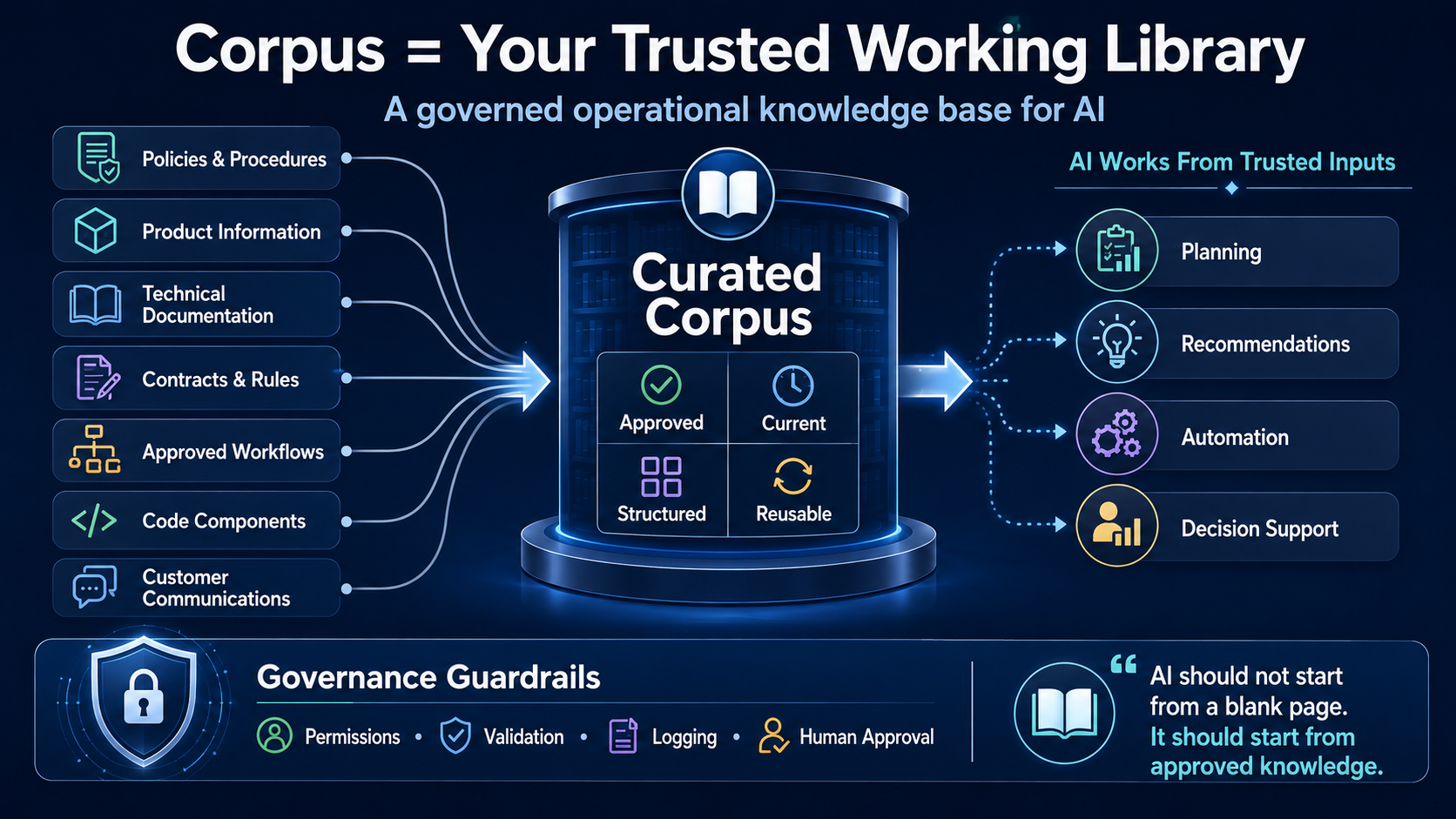
Kinsugi uses process context to shape software that works. When a business describes what it needs to Gain, Kinsugi's AI engineering partner uses that understanding to build solutions from tested, reusable modules. Strong process context lets Gain build faster and more accurately, because the problem is clear and the constraints are known.
Approvals and checks are built into the work. Because Gain understands the process, it can flag where an AI decision might cause problems and where human judgment must stay in control. The result is software that improves how teams sell, serve customers and run operations without creating new risks.
Getting Started
If your organisation is planning an AI or software project, start with process clarity. Spend time understanding how the work actually happens. Talk to the people who do it. Document the steps, the data, the decisions and the outcomes. This foundation will cut the time to value and raise the odds of success. Process context is not a luxury—it is the difference between AI that works and AI that fails.